5 ways display signs can help communicate your company’s brand

When considering the marketing mix for a brand, you really can’t afford to leave out any of the tried and tested traditional advertising methods, and that includes signage. In fact, while signs may seem to be one of the most humble ways to advertise a brand, there are actually many positive benefits that may not be immediately obvious. In this article we’ll take a look at just five of the most important advantages that a good display sign campaign can provide to your business.

  1. High volume impressions at low cost

All of the other major forms of advertising mediums typically rely on broadcasting a message over a very wide geographical area. To get this kind of coverage, you have to pay comparatively high prices. Signage, even when it is mobile, doesn’t have this ability to reach widely spread audiences simultaneously. What it does offer, however, is the ability to make impressions on the same audience within a given geographic range over and over again. When you consider the low cost involved, this can be a great value opportunity, especially if your business is likely to get most of its trade from within a limited geographic range.

2. Traditional display signs are efficient

Because signs are intended to capture the attention of people rapidly passing by a fixed point, they are engineered to convey an effective message as efficiently as possible. When this is done very well, you can create a lasting impression with an audience, which at best may be expected to see your sign for just a second or two. This is one of the key reasons why big brands like Coca-Cola and McDonald’s invest heavily in these types of signs.

3.Now that signs can be digital, you have more choices available

Digital signs can allow an individual company to deliver a more complex message about a brand if desired.  When your ad has the potential to capture the attention of some passers-by for more than just a second or two, the digital option means you can put on a real show. Digital signs also allow multiple companies to time-share static sign advertising from one location, which can help bring the already low cost down even further.

4. Digital signs can engage audiences with full interactivity

Technology has resulted in smarter signs that are able to interact with audiences that pass by them. Extending that amazing feature even further, digital signs can allow an interested audience member to develop a richer relationship with your brand by enabling an opportunity to interact with your ad to find out more information on the spot.

5. A well-designed locally placed display sign has the potential to get global exposure

Signs are now better value than ever because if your creative designers can come up with a concept that really resonates, amuses or horrifies your audience on a local level, there’s a very good chance they will share it on a global level using technologies such as Facebook, Twitter, and Tumblr. The key is being creative and original enough to make people want to share your creation with others.

While signs are certainly not the only marketing opportunity for your business, they are proven to work, cost effective, and in the case of digital signs, they can engage audiences in new and innovative ways. The tendency for people to share interesting sights instantly on social media has the potential to help you achieve more market penetration than you’re actually paying for, provided that you genuinely can make your sign an interesting sight.

How Outdoor Displays Can Increase the ROI of your Business

Marketing is never a simple task. There is always a lot of trial and error involved, and you’ll sometimes miss more often than you hit. The good part is that every hit you get more than makes up for all the misses. What you’re actually doing with each and every marketing effort is speculating on the public reaction to whatever it is that you’ve created.

No matter what kind of business you have, you will gain more attention when you put your marketing message in front of the largest possible audience. Television is one way, and history has certainly shown that it does work. The downside is that it’s a very expensive medium. The Internet is another choice, and it’s certainly usually less expensive than television, but in this case your message can be lost among all the millions of other messages. Not only that, but some people actively filter out and block advertising messages.

Outdoor Displays & Marketing

Using outdoor displays is a sensible and economical way to reach large numbers of people in a short time span.  The reason it works is because when people are in transit from one place to another, they spend most of that time outdoors. Putting your display where large numbers of people are going to see it has to improve your chances of success.

The important thing, of course, is that your display actually has to be good enough. It must capture attention and stir imagination, or it won’t work. You need to create something that makes people think about you and that creates a strong association in some way so that they’ll remember you.

Because the outdoor display is a low cost medium that reaches high levels of passing traffic, it is a marketing medium that gives you a high return on your investment. Handled correctly, it should bring you more customers, and that will increase the overall profitability of your business.

As with any other sort of marketing, you need to track your results. Make an observation of the dynamics before and after you launch the display, and use this data to help you formulate strategies to refine or improve your display. There’s no need to simply create once and then rest on your laurels. It’s far better to be constantly updating and improving.

The best campaign is a dynamic one. It constantly changes and adapts the way the core message is presented, but without losing the fundamental principle behind it all. When people see the same thing over and over for a short time, it helps them to remember it. But persist with that for too long and they’ll begin to not even see it.

Outdoor displays have been around for as long as business has existed. In fact they are the oldest form of marketing there is. For all that, they are also proven to be successful and even today remain to be one of the best ways to attract new customers and achieve brand recognition.

FirstLight Logo Redesign

FirstLight Logo Redesign

A brand revamp for one of our favourite clients (are we allowed say that or “is that racist Ted?”). Upper Case were recently tasked with a redesign of the logo for FirstLight. The brief included the addition of a flower with a missing petal and a flame of light similar to the previous logo design.

Introducing a new colour palette and logo icon helped to add new vibrancy and a softer feel to the existing identity and the existing concept, without necessitating a complete redesign. The flame and the flower were merged to create a logo representing both in a subtle way, considering this sensitive subject.

View our logo and branding portfolio here

FirstLight Logo Design

CLIC Brand Design – Recent Work

CLIC Logo Design – Downing Commercial

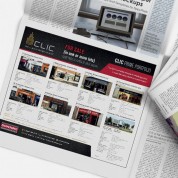
Upper Case were recently tasked with developing a suite of marketing materials for our client, Downing Commercial to help them launch a 9 million euro property portfolio. The Cork Limerick Investment Collection (CLIC) project comprised logo and branding design, sales brochure/portfolio, online brochure design and a series of national press adverts.

The logo design that was created is a simple design with the aim to make a strong impression in the property market. The logo has an abstracted skyscraper to represent the commercial property nature of the business.

View our logo and branding portfolio here

Tervas Gas Logo Design – Recent Work

Tervas Gas Logo Design

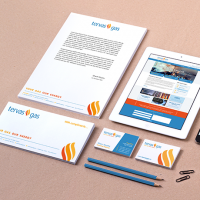
Tervas Gas are a nationwide  provider of bulk & bottled LPG gas to both the business and domestic sectors. Recently we were tasked to create a new brand identity for the company, along with a supporting logo tagline. Once this was completed it was on to the responsive website and printed materials.

Brand Identity

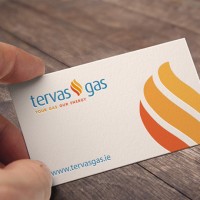
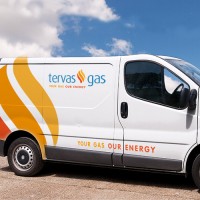
Tervas Gas has a new clean logo design, typical of Upper Case’s design ethos. This colourful, simple and elegant new logo has been applied across the brand, from stationery and livery to the web.

View our logo and branding portfolio here

Responsive Website

The new website is desktop, tablet and mobile friendly, allowing it to be consistent across the web, no matter where people are viewing it from.

View Website

Why You Should Use Promotional Products in 2016

Why You Should Use Promotional Products in 2016

If you’re looking to get your brand noticed, promotional products offer a unique opportunity to place your company’s name right in front of your target market. They not only increase brand awareness, but they have the potential to increase your chances of making those all important sales and, far from being an unnecessary expense, you’ll find that they’re a cost effective way to promote your business.

Furthermore, your promotional products can be selected to represent your brand and company ethos, whether you choose traditional items such as ball point pens, coffee mugs, baseball caps and umbrellas or more unusual items such as blankets, first aid kits or USB drives.

If you’re in any doubt why you should use promotional products in 2016, here are ten good reasons to include them in your marketing strategy.

  1. They keep your brand in the minds of your customers.

By ensuring that your promotional items include your company name, contact details and logo, your brand will remain foremost in the mind of both your existing and potential customers.

  1. They convert more customers than any other media.

Promotional items work almost like a silent sales person. They remind your customers about your business even when your business is closed.

  1. They can be used as an icebreaker for new clients, or clients you’d like to retain.

Whenever you get a new client, sending them some kind of promotional item shows that you value their business, meaning they will be more likely to use you again.

  1. When combined with your marketing literature they offer a tangible reminder of your business.

If you want to get your business noticed, your sales literature is more likely to be read when it’s accompanied by a promotional item.

  1. They’re a great way to launch a new product or a new marketing campaign.

Branded products not only create interest and curiosity, but customers are likely to hang onto them, meaning that they’ll remember your company the next time they’re looking for that particular product or service.

  1. When used at tradeshows they’ve been shown to increase traffic to a stand.

People love to collect ‘freebies’ at trade shows, so make sure that your gifts stand out, and that your contact information is always included. Using unique promotional items rather than the usual pens and stickers will ensure that your product or service is remembered ahead of that of your competitors.

  1. Consumers are often willing to switch brands so that they can receive a free promotional item.

Again, people love ‘freebies’. How many times have you bought a different brand of coffee from your usual because they offered a free coffee cup?

  1. They can be used to mark a company anniversary or special occasion, or to acknowledge the work carried out by your staff.

Many businesses choose to use promotional products such as laptop cases and leather bound notebooks as performance incentives to motivate their staff.

  1. They’re a great way to thank your customers for their support.

Everyone loves to feel appreciated.

  1. The vast majority of people enjoy receiving promotional products and will keep and use them.

Meaning that your brand is constantly being seen.

When making a decision about which promotional products to use, you should always take account of your target market and your allocated budget. It’s also important to remain consistent with your branding, and the company image that you wish to portray. Remember that these items should enhance your business, so take time to ensure that you get the perfect products to represent your brand.

How to Develop a Corporate Identity

One common problem that all business owners must resolve is how to best stand out amongst the competition and increase customer loyalty and purchases. The solution is to develop a unique corporate identity that includes a branding strategy that expresses the essence and intent of one’s business. This identity must be powerful enough to cut through the noise and make a lasting impression upon potential customers. Ultimately, this strategy should translate into repeat purchases of products or services.

In order to effectively develop a corporate identity and effective brand there are a number of distinctions that need to be clearly understood.

What is a corporate identity and why is it important?

A corporate identity is the particular traits of personality and character that identify a business to the consumer. It is a sense of individuality and style that differentiates it from the rest and includes the business’s mission, message, ideals and essence that shape how it functions and is perceived.

Put simply, a corporate identity is a kind of persona and attitude that succinctly captures what the company is all about. When such an identity is successfully developed it is accurately perceived by ones customers.

Identity and personality

It is important because in a similar way that people respond to personality, charisma, honesty or integrity, they respond accordingly to the identity of a company. Very few people prefer to spend time with dull, boring, ineffectual and insipid companions.

When it comes to the world of business, customers align themselves to identities they resonate with and relate to. There is something reciprocal that is exchanged when a customer feels that a business understands their needs and is in harmony with their values.

If a business has a weak identity, customers will lack any strong motivation to interact with it. Powerful identities evoke equally powerful responses and in the realm of business this can translate into increased sales and greater customer loyalty.

How is branding different to a corporate identity?

  • Branding is more like the image of the company, rather than the style.


  • It is helpful to think of identity as essence and brand as the look, shape, form and substance.


  • Identity is the WHY of the company (why it exists, why performs as it does and why it has value etc.)


  • Branding is the tangible HOW (how it is identified, how it expresses itself and how it is packaged, produced and sold etc.).

Common elements of branding

A sign of good branding is having customers that are readily able to identify one business’s products and style from that of another. Elements may include a distinctive logo, colour scheme, tag line, unique selling proposition and packaging if there are physical products involved rather than services. Branding can include very specific elements such as fonts, typefaces, letterheads, style guides and a related product range that is in harmony with the corporate identity of the business.

There are many services that specialise in helping businesses develop brands but graphic and branding design certainly ranks amongst the best. It is clear that in order to market ones business effectively, the issues of corporate identity and branding need to be thoroughly considered, developed and consistently defined. Seeking the services of professionals experienced in guiding business through this process is highly recommended to ensure the job is done properly.

Creative design plays an important part in organisations

Business theory is based on the the idea of creating wants and needs. Creative design is a fundamental part of this in that it creates an image for this need. Great designers understand consumers and their needs, aspirations and emotions.

It’s not what you say, it’s how you say it

We at Upper Case think that it’s both! Design is all about communication. You create your goals and your message, and we communicate them clearly to the customer. According to Bloomberg Business, “Design is a process of synthesising insights into a tangible offering in a way that addresses the goals of the company and the desires of consumers.”

A successful piece of creative design work should not be noticeable to the consumer. The aim is for a customer to remark on your great business, not your great graphic design, unless like us you are in the business of design!

Creative design & tone of voice

The designer communicates the tone of voice for the company and expresses the value to the consumer. Do you want your organisation to say that you are about exclusivity and luxury, or value and convenience?

Building a brand

Philip Kotler, Professor at the Kellog School of Management says that “the art of marketing is the art of brand building. If you are not a brand you are a commodity. Then price is everything and the low cost producer is the only winner.”

Form follows function

This popular design phrase, coined by a father of modern design, Louis Sullivan explains how in design as opposed to the arts, the function of a piece is more important than the visual look of it so if the best way for us to get your message out there is with a direct mail campaign or with a website, we will be sure to choose the best option to get the best results for your organisation because business is all about results. Just like in marketing, good design is SMART-Specific, Measurable, Actionable, Realistic, Timely. Designers often include a call to action in their message, which is a technique to get measurable results from design.

Graphic design & the bottom line

It’s all about lean in business these days- cutting the fat and identifying limiting factors that stand in the way of achieving corporate goals. In design, lean methods have always been best practice. Graphic Design Agencies always look for the most creative, most efficient and most effective ways of communication. Creative design wins over budget in terms of customer impact and this of course has a positive impact on your bottom line.

View our logo and branding portfolio here

Re-Branding Your Business? Here’ A Guide Of What To Do.

rebrand
Whatever the reason for your re-brand, there are several advantageous marketing opportunities that will evolve your brand so that you can stay relevant in an ever-changing marketplace. As you’re probably aware, any re-branding scenario will require a detailed analysis of the current marketplace and how best to re-enter it. There are several common strategies that every re-brand should consider as well as several easy to avoid pitfalls that you will likely run into. The main idea of any well thought out re-brand will be to execute a well-organised and thoroughly researched strategy that both repositions and revitalises your business.

You can start by taking heed of the following do’s and don’ts when it comes to rebranding your business:

Do Hire a Graphic Design Consultant

Getting an outside perspective from a graphic design professional is key to understanding how to re-brand in any market and how you handle the relationship with the consultant could potentially make or break your re-brand. Getting an outside perspective may mean hiring an agency with no other clients in your industry, which may be outside your comfort zone. But getting outside your comfort zone is exactly what getting a new perspective is all about so don’t be afraid to consider it as a serious option. If you push back too much with your consultants, you are essentially defeating the purpose of the re-brand.

Don’t be Afraid to go Big

If you are feeling overwhelmed at the scope of your re-brand you may want to take a step back and re-evaluate your goals. Don’t be afraid to actually follow through with all your over ambitious plans. A superficial re-brand will come off as forced and may hurt things even more in the long run. An organised, adaptable and long-term strategy will ensure that your goal of creating a new, better brand will be reached. The cost may seem big at first, but the potential payoff is there if done right.

Do go back to Basics

Basic business strategy applies very poignantly when it comes to a re-brand. Common mistakes like not doing enough research or basing your whole re-brand on advertising are to be avoided at all costs. Another common issue is staffing which can result as too many chefs at the top deciding on the strategy and spoiling the proverbial pot. Decisions with serious implications should be decided by only a few people to keep the re-brand strategy efficient and its processes streamlined.

Do Use your Common Sense

Most of the do’s and don’ts to a re-brand are common sense and include:

• Do re-imagine more that a new logo

• Don’t think that a new logo will be enough to change the internal and external perceptions of your company

• Do hire a local graphic designer to design and build your logo to get a really professional job

• Check out our Blog Post for Why you Should Hire A Local Graphic Designer.

• As well as getting external insights (as outline above), do look for internal feedback too

• Do build a new brand that’s real to your business, and reflective of your goals

• Even it it’s what you think your customers will want, don’t build a brand that’s not authentic to your business

Good business practices and a fresh perspective on your vertical market guided by thorough research into current best industry practices will yield an effective strategy to build an entirely new brand for your business. But remember, for your rebranding to be a resounding success, your approach to your rebrand must be intentional and proactive, rather than a reaction to new business conditions such as new markets or mergers.


Why You Should Choose a Local Graphic Designer

Nowadays, the reality is that almost anyone with an Internet capable device could label himself or herself a graphic designer. It’s pretty easy to draw something up, be it a logo, a wire frame or a cartoon drawing of your own face.

Producing something high quality, however, is much more difficult. When it comes to your business, you really do need to put your best foot forward for your customers’ first impression of you, and that means effective branding.

Sure, you don’t technically need branding. After all, you could just write what you do on a piece of paper and stick it to the door – but in fact, that is branding itself – just a truly awful version of it.

And no, the best thing to do is not to try to DIY your logo or your website. Your time is much better spent working on your business than trying to work out layering on Photoshop. Who has time to do everything? You could try to file your own taxes, do your own accounting, look after your own branding, cook your own dinners and take care of the managerial and all other tasks in your business, but at the end of the day, some things are best left to someone else – a specialised professional.

Graphic design is one of those things. And it’s also something that most business owners don’t get around to doing – there’s just too much to worry about in that area. Why not get a professional to take care of it for you? You’ll barely have to think about it and your business will reap the rewards.

Every small business needs to stand out. Chances are, you’re not the only company who offers your product or service so what makes you different than the others in your industry? Not just graphic design, to be sure – but branding is what people see, and how they make their first decision about your company. It’s an important decision, and graphic design can make all the difference.

Keeping your branding consistent can make all the difference to how your customers see you. You might be surprised how many brands you recognise just from their logos, even without the writing. Designers know how to use details and fonts to get the best out of your business name and place in the industry. Designers also know about image sizing and how things will print. It’s worth hiring one alone just to avoid these headaches.

But which kind of designer should you choose? It can be overwhelming to search online, and how do you know who is any good? There are lots of ways to find a quality graphic designer with one of the best ways being to find someone in your local area so that you can meet with them in person and get your requirements across. Another advantage of doing so is that before they start work, they can stop by your business and get a feel for what you’re like as a company, and begin to generate some creative ideas based on their findings.

Hiring a local graphic designer is a great idea for any sized business and, given the significance of quality branding in today’s marketplace, it’s always worth the investment.